
Findlay Previous Residents by Era
A Findlay previous residents search changes shape with the period being investigated. Newer land records can take a searcher from the current parcel into recorded deeds. Older work often begins with a historic index and continues at the Recorder counter. The library adds the historical address layer through selected city directories, a 1997 cross-reference directory, local newspapers, maps, and research help. Census and map evidence describe a past moment, so pair them with a directory or a legal-description trail rather than treating either as a complete address history.
| Source | Verified era | Where held | What it can show |
|---|---|---|---|
| Recorder online documents and images | January 1, 1985 to present | CountyFusion | Recorded document image and index |
| Historical deed indexes | 1936–1990 exposed branches | CountyFusion Historical Indexes | Grantor/grantee book and page leads |
| Digitized city directories | 1879, 1888, 1892, and 1902 | FHCPL Digital Archives | Period address and household representation |
| Polk Cross-Reference Directory | 1997 | Verified Hancock County holding | Address-to-name directory lead |
| Sanborn maps | 1884, 1887, 1890, 1895, 1901, and 1908 | Library of Congress and FHCPL links | Street configuration, footprint, and building use |
| Federal census | Released schedules through 1950 | National Archives and library databases | Household snapshot near a directory year |
| City permit files | Historic online coverage not located | City counter or records request | Dated project evidence at an address |
Start with the parcel for a recent address, then select the record closest to the date in question. For a nineteenth-century address, a digitized directory and map may be the practical opening. For a later transfer, the deed chain is stronger. The Findlay-Hancock County Public Library is the principal historical fallback: its Local & Family History collection is non-circulating, and its research-request form accepts narrow requests for indexed or digitized FHCPL resources by email or post.
Hancock County’s Archive Center is the source shown here for older county-document searching.
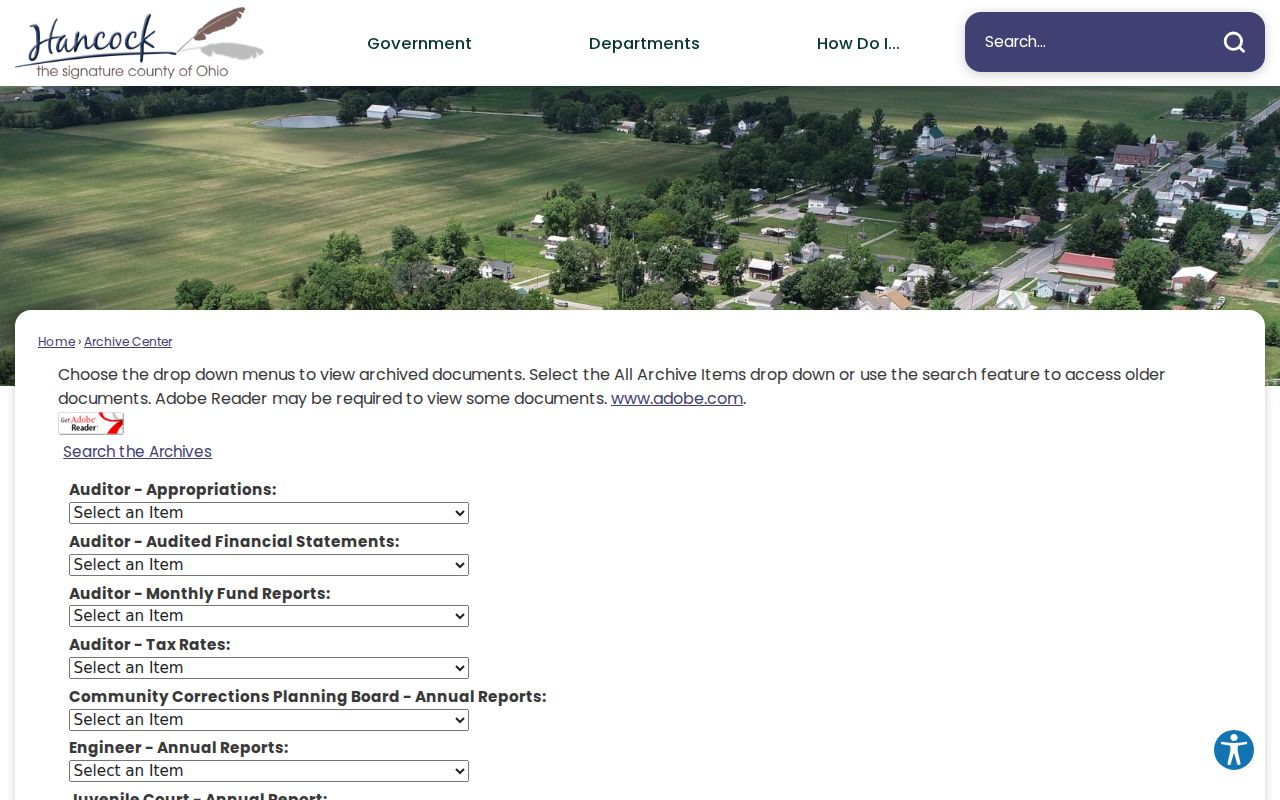
The Archive Center is a separate keyword, archive, time-period, and date-range search, so it can support context without replacing the Recorder’s deed index.
Start Findlay Previous Residents with a Parcel
The Hancock County Auditor is the correct beginning for a present-day Findlay address. The Auditor maintains the county’s comprehensive real-estate records and directs address work to its Beacon property and map entry point. Capture the parcel identifier, current owner lead, property location, legal description, and sale clue. Do not depend on the street number alone. The Recorder says its search cannot be run by parcel number, and an old number may not be enough to establish that two records concern the same piece of ground.
Beacon was access-gated during the research inspection, so the exact live labels were not claimed. The county verifies the portal’s role. When the hosted screen does not open, the Auditor supplies two public PCs and Real Estate/GIS staff at 419-429-7320; the Auditor office is at 300 S. Main Street, Rooms 21–22, with weekday hours of 8:30–4:30. That counter route is the primary access fallback for a parcel card and its explanation.
Findlay Previous Residents Deed Trail
The Hancock County Recorder is the legal-description bridge between one Findlay property record and an earlier transfer. CountyFusion provides guest/public access after its disclaimer. It has All Names, Instrument Number, Book/Page, Condominium, Subdivision, Township, and Historical Indexes modes. In All Names, a name can be narrowed by party type, name option, recorded date, and document type. Individual names are entered last-name-first. A deed result gives the placement and party information needed to find the seller’s earlier acquisition.
- From the Auditor record, keep the current owner lead, legal description, property location, parcel, and a sale clue together.
- Search the current owner as a party or grantee in CountyFusion, narrow to a deed and date when the available facts justify it, and record the seller, instrument number, book/page, recorded date, and legal description.
- Search the seller as a party or grantee to find that person’s acquisition. Compare the lot, subdivision, and legal description before continuing.
- Repeat the sequence one transfer at a time. The legal description is the check against a misleading street-number match.
- For pre-1985 work, use Historical Indexes for leads, then bring the name, book/page, description, and date range to Recorder staff for old deed-book or assisted-copy research.
- Grantor
- The party conveying an interest in a recorded instrument.
- Grantee
- The party receiving an interest in a recorded instrument.
- Chain of title
- The successive recorded transfers that connect one owner or interest to an earlier one.
- Legal description
- The lot, subdivision, township, or other land description that links documents even when a street address changes or is written differently.
The Recorder offers counter, telephone, and online alternatives for deed or mortgage copies. A caller may give a name and address so staff can locate documents. The Recorder counter is at 300 S. Main Street, Room 23, Findlay, with weekday hours of 8:30–4:30 and a daily recording cutoff at 4 p.m.
Findlay Previous Residents Before 1985
January 1, 1985 is the most important number in a Findlay previous residents deed search. The Recorder states that recorded documents and images from that date forward are online. Older indexes can be viewed online, but pre-1985 records require an office search. This divide describes document-image access, not the beginning of the older record trail. An older hit in a historic index is valuable because it identifies an instrument path, but it is not a guarantee that an image can be opened remotely.
The Historical Indexes tree exposes deed-index branches from 1936–1990, grantor leases from 1902–1977, grantor lien/lease/miscellaneous branches from 1928–1990, and later grantee lease/lien-related branches. A lease or lien can reveal a party and date, but it does not establish ownership. For old documents, staff can search deed books and provide assisted or certified copies. The Recorder’s published copy alternatives mean a previous-residents search does not end when a portal stops.
Findlay Previous Residents in 1997
The verified 1997 Polk Cross-Reference Directory is the most direct local address-to-name resource in the records reviewed. Use it after establishing the street form and approximate year, then move to a standard city directory or other period record for context. It is a single confirmed year, not proof of a continuous reverse-directory series. The earlier digitized Findlay directory editions are 1879, 1888, 1892, and 1902, while an Ohio Genealogical Society accession inventory identifies selected later Polk holdings that should be confirmed before a visit.
The Local & Family History collection at FHCPL is non-circulating. In-building options include Ancestry Library Edition, NewspaperArchive, census, land, probate, vital, church, directory, and other research material. For a narrower off-site task, the request form allows one weekly form with up to three requests for indexed or digitized FHCPL resources. Copies are free and can be returned as scanned email or physical mail; donations are optional. The holdings and how to read the volumes are covered in the Findlay city directory collections.
Note: A cross-reference or directory hit is a period clue, so check spelling, street form, and the closest available dated record before treating it as an address match.
Findlay Households, Census, and Maps
Directories, census schedules, and maps give a past-residents search its household and building context. The federal census schedules released through 1950 provide a household snapshot. Pair a Findlay directory year with the nearest released census, then compare the address and name evidence with the deed sequence. The FHCPL Digital Archives also makes historic Hancock newspapers available from 1846 through the 1970s. Search surname variants and street forms because the archive uses OCR and older documents can be indexed inconsistently.
- Choose the directory or cross-reference year nearest to the address period and record its spelling of the street and names.
- Locate the nearest released federal census through the National Archives census research resources or an in-library genealogy database.
- Compare the household snapshot with the directory entry and the deed’s legal description. A disagreement is a reason to check another year, not to force a match.
- Use a Sanborn map to assess street layout, building footprint, and use. Findlay sets are verified for 1884, 1887, 1890, 1895, 1901, and 1908.
National Archives census genealogy guidance is the source shown here for the released-census channel.
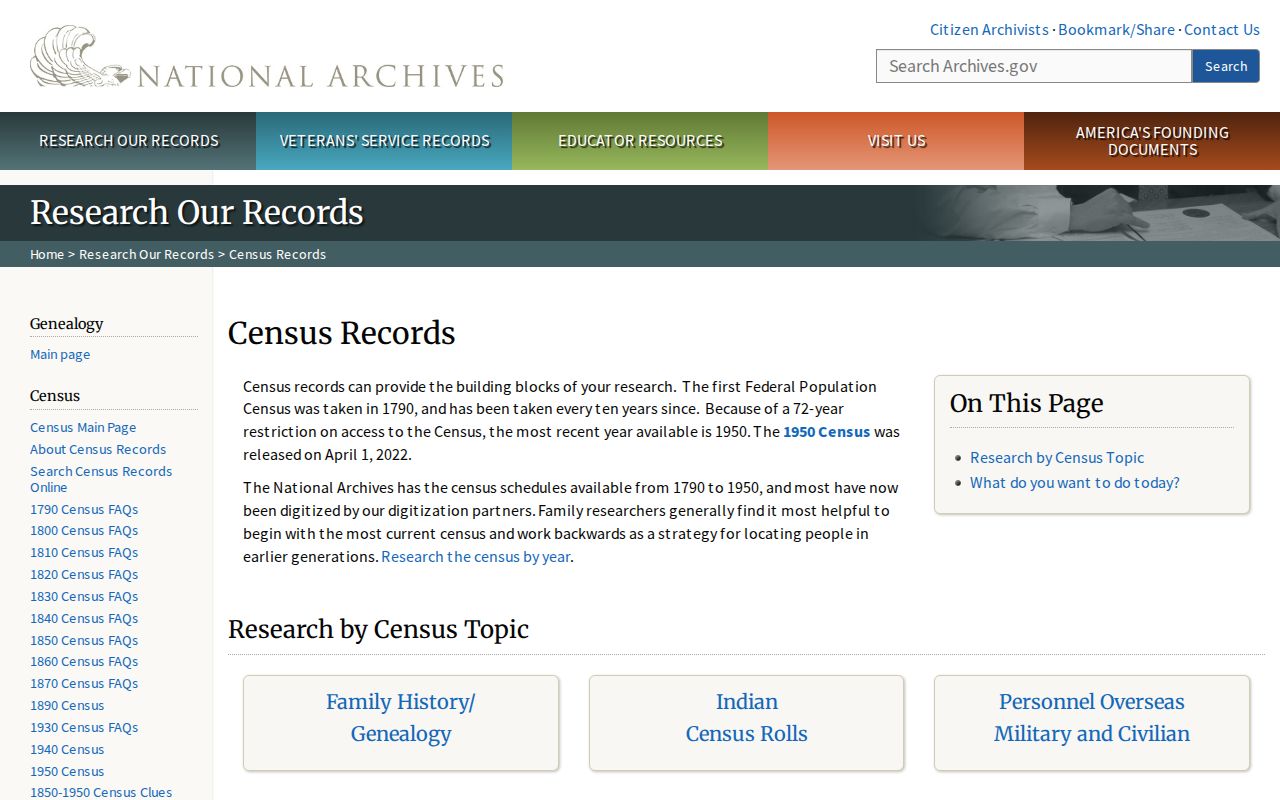
Census research supports a dated household comparison, while a Sanborn map is limited to the property’s layout and use rather than the identity of people there.
Findlay Previous Residents and Permits
When the deed trail and directories leave a time gap, a City zoning permit or related property file may date a change. City Zoning keeps permits, compliance certificates, site plans, variances, and related records under §1165.04. The office advises an exact address or parcel, a date window, and the document type. No public historic permit-result list was found in the reviewed official sources, so the practical route is the counter, a form, or a public-record request under Ohio R.C. 149.43.
Form material identifies construction location, property-owner, contractor, applicant, applicant role, property use, work description, signature, and date as kinds of information the City holds. That can date a project or physical change, but it does not establish a permanent household. The office is at 318 Dorney Plaza, Room 304, Findlay, telephone 419-424-7108, weekdays 8–5.
Findlay Previous Residents at Trail End
Obituary citations, cemetery information, and probate files can help close an older address trail. The Ohio Obituary Index is the starting point for an obituary citation, and FHCPL’s request form asks for newspaper title plus publication date and page for an obituary request. The library holds local newspaper microfilm and links to the Ohio obituary index. Maple Grove Cemetery is a municipal historical source; no official online interment name search was located, so Public Works can be asked for lot-location or deed-transfer information by full name and an approximate death or burial period.
Probate Court keeps estates, guardianships, marriage licenses, name changes, adoptions, and related probate matters. Its separate search screen supports name, case, and file-date work, but the office visit or written request is the route for verified information. Adoption and mental-illness records are confidential. Use an obituary, a cemetery response, and a probate matter as corroborating historical evidence, not as an excuse to publish sensitive information.
Ohio Obituary Index is the source shown here for the obituary-citation channel.
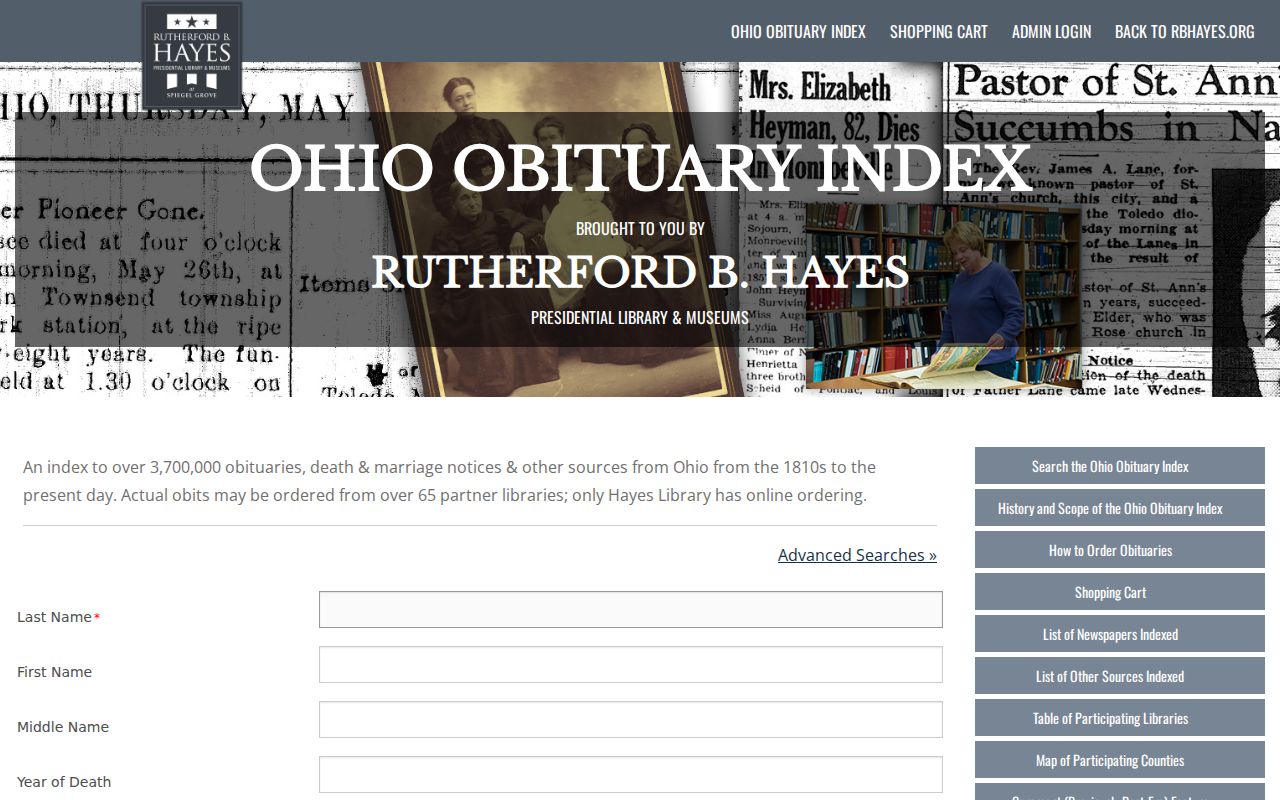
The obituary-index capture belongs at the end of the chain because it can direct a researcher to a dated newspaper citation that is then checked through the library collection.
Lawful personal use. Previous-residents research is appropriate for family history, house history, estate questions, and personal curiosity. Do not use an address history to stalk, harass, threaten, or harm anyone, and respect sealed and protected records.