
Findlay City Directory Collections by Era
Findlay city directory research begins with a small, verified online run rather than an assumed annual series. The Findlay-Hancock County Public Library Digital Archives holds four digitized editions: 1879, 1888, 1892, and 1902. Each has a different scope and format. The 1879 railway gazetteer reaches beyond the city, while the 1888 and 1892 volumes include alphabetic and business material. The 1902 Wiggins book reaches into 1903. Treat the editions as dated publications, then use their contents and abbreviation key before drawing a conclusion from an apparent name match.
| Collection | Years | Where Held | Access |
|---|---|---|---|
| Digitized Findlay directory editions | 1879, 1888, 1892, 1902 | FHCPL Digital Archives | Free online title browse and keyword search |
| Wiggins’ Findlay City Directory, Vol. V | 1902–1903 | FHCPL Digital Archives | Digitized edition; check the volume’s own notes |
| Later R.L. Polk holdings | 1958; 1966–67; 1970–71; 1973–74; 1980–83; 1985–94; 1997–98; 2002 | Ohio Genealogical Society accession inventory | Confirm present availability with the library before travel |
| Polk Cross-Reference Directory | 1997 | Ohio Genealogical Society accession inventory | Address-to-name lead for that directory year |
| Robinson Hancock County Rural Directory | 1978, 1982, 1984, 1986, 1989, 1992–93, 1995, 1997 | Ohio Genealogical Society accession inventory | Holding status needs confirmation |
The later Polk and Robinson entries come from an Ohio Genealogical Society accession inventory. That is solid evidence that those titles were recorded there, not proof that every missing year was printed, retained, or is available on a particular day. The 1997 cross-reference volume is especially useful when an address is already known. It should not be stretched into a general current-address source.
Four Findlay City Directories Online
The Digital Archives title has 1,461 digitized pages across its four verified Findlay city directory editions. Start with the title browse for a particular year, then try surname variants, business names, and an older street form. OCR is useful for locating a page, but old type and initials can confuse it. A manual look at nearby alphabetic entries often resolves a doubtful hit. The 1879 volume is a regional railway directory, so its private-citizen material is not a complete Findlay-only roll.
The Hancock County record resources page connects the historical layers that sit beside a directory search.
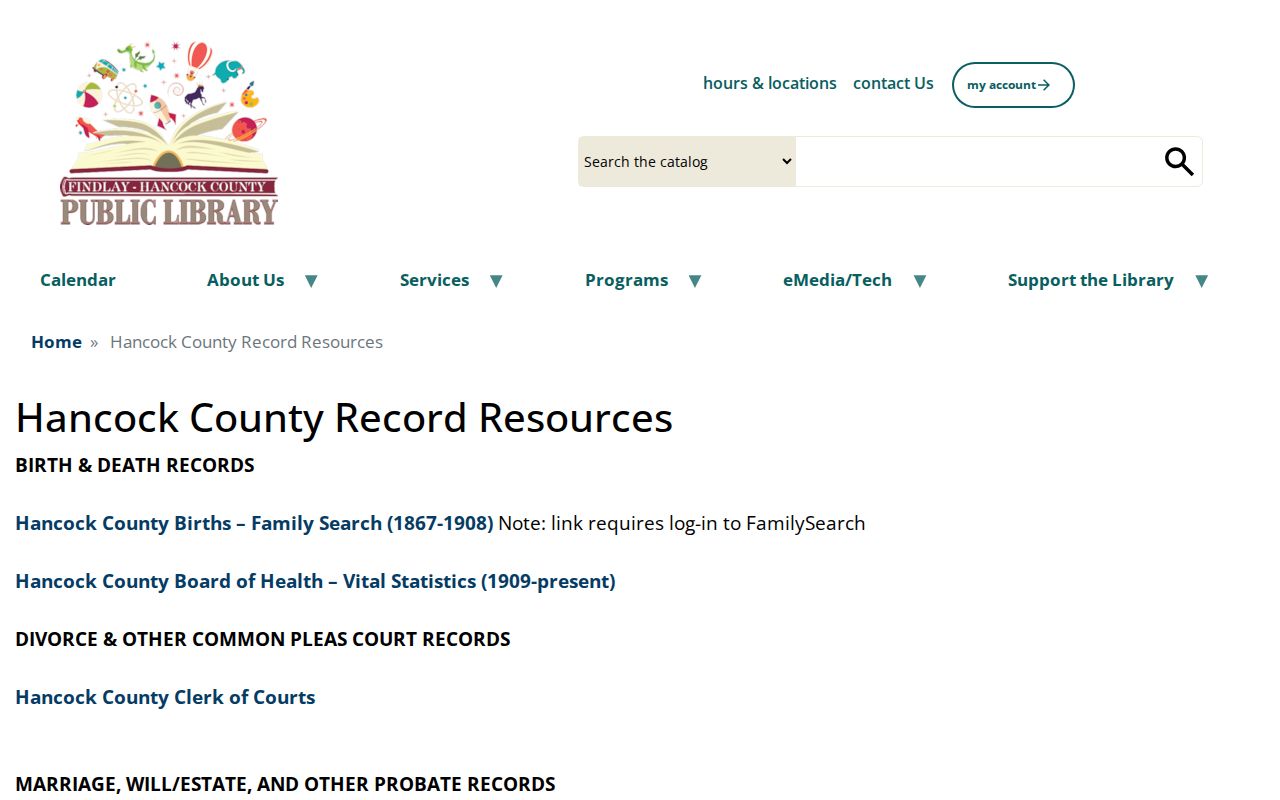
Those linked resources help test a directory date against birth, marriage, death, naturalization, or census material instead of treating one printed entry as final proof.
Note: A missing name may reflect coverage, spelling, temporary absence, or a different indexing choice rather than a confirmed move.
Findlay City Directory Help at FHCPL
The Findlay-Hancock County Public Library, at 206 Broadway, is the main local historical fallback. Its Local & Family History collection does not circulate. An in-library visit is the route for the collection itself and for databases such as Ancestry Library Edition and NewspaperArchive that the library describes as on-site access. The library also points researchers to HeritageQuest, the Ohio Death Certificate Index, the Ohio Obituary Index, Sanborn maps, and local newspaper microfilm. Those companion sources are often the fastest way to test whether two directory entries name the same household.
Remote work has a defined channel. The current Local & Family History request form accepts email or postal requests for indexed or digitized FHCPL resources at askgenealogy@findlaylibrary.org or 419-422-1712 ext. 143. One form per week may hold three requests. The requester can choose scanned email copies or postal copies, and the library says copies are free with donations optional.
FHCPL’s research databases show the mix of in-library and remote tools available for a Findlay city directory investigation.
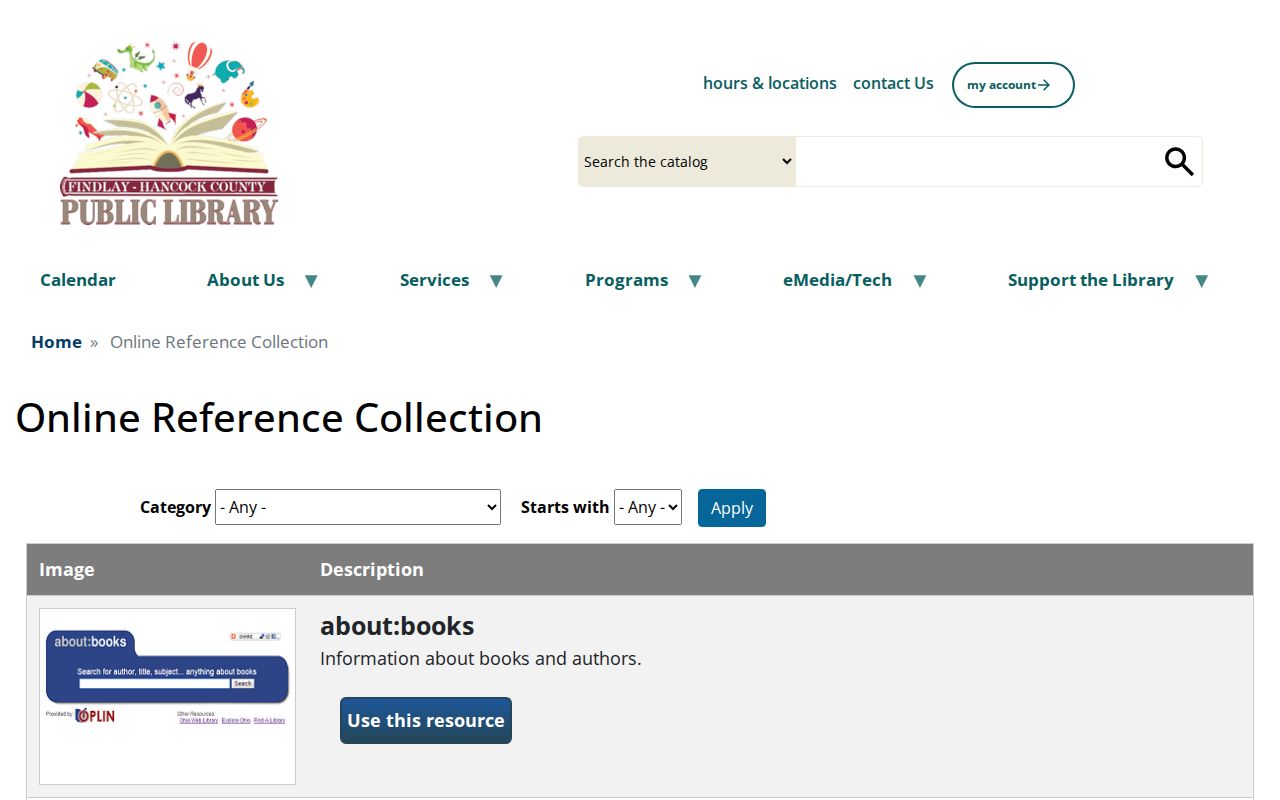
Use the research form for a focused indexed or digitized question, and use the library visit for a longer comparison of directories, newspapers, and map material.
Wiggins’ Findlay City Directory Gap
Wiggins’ 1902–1903 volume is labeled Vol. V and identifies The J. Wiggins & Co. of 88 N. High St., Columbus, as publisher. Its publisher note says Vol. IV had appeared in 1897 and that local or itinerant publishers filled the interval. That note matters. A researcher who sees no Wiggins volume for a particular year should not conclude that Findlay had no directory activity then. It identifies a publisher sequence, not a complete list of every local publication.
The 1902 directory also preserves the civic texture of the gas and oil era. Its pages identify ward council, schools, elections, churches, libraries, newspapers, fraternal groups, Maple Grove, and the Board of Trade. The 1888 edition advertised free gas for fuel. These details are historical context, not evidence about a modern person, but they can identify the organizations or neighborhood records worth checking for the same period.
Findlay City Directory Numbers and Limits
The useful number is not an assumed number of annual books. It is the 1,461 pages currently identified in the Digital Archives title, spread over four verified editions. The page count shows why an exact search term can miss a result. A household may be in the private-citizen list, a business classification, an officers’ list, or an advertisement. Search more than one spelling, then record the page and edition before moving to another source.
Later dates require even more care. The R.L. Polk inventory lists selected runs rather than a continuous sequence, and the 1997 Polk Cross-Reference Directory has a different purpose from an alphabetic volume. It starts from an address and yields an address-to-name lead for 1997. It does not establish that a person lived there before or after that specific edition.
Note: Keep the directory year beside every transcription because the same street address can carry a different household in the next available volume.
Findlay Maps Beside City Directories
Maps answer a different question from a directory. The library’s Findlay and Hancock map links include county maps from 1863, 1872, 1875, 1886, 1890, 1910, 1914, and 1915, plus a 1901 Findlay topographical map. Library of Congress Sanborn sets are verified for Findlay in 1884, 1887, 1890, 1895, 1901, and 1908. Compare the directory’s street wording with the map, building footprint, and land use before assuming a familiar present-day address means the same thing in an older book.
The library’s Findlay map resources bring the historical map routes together.
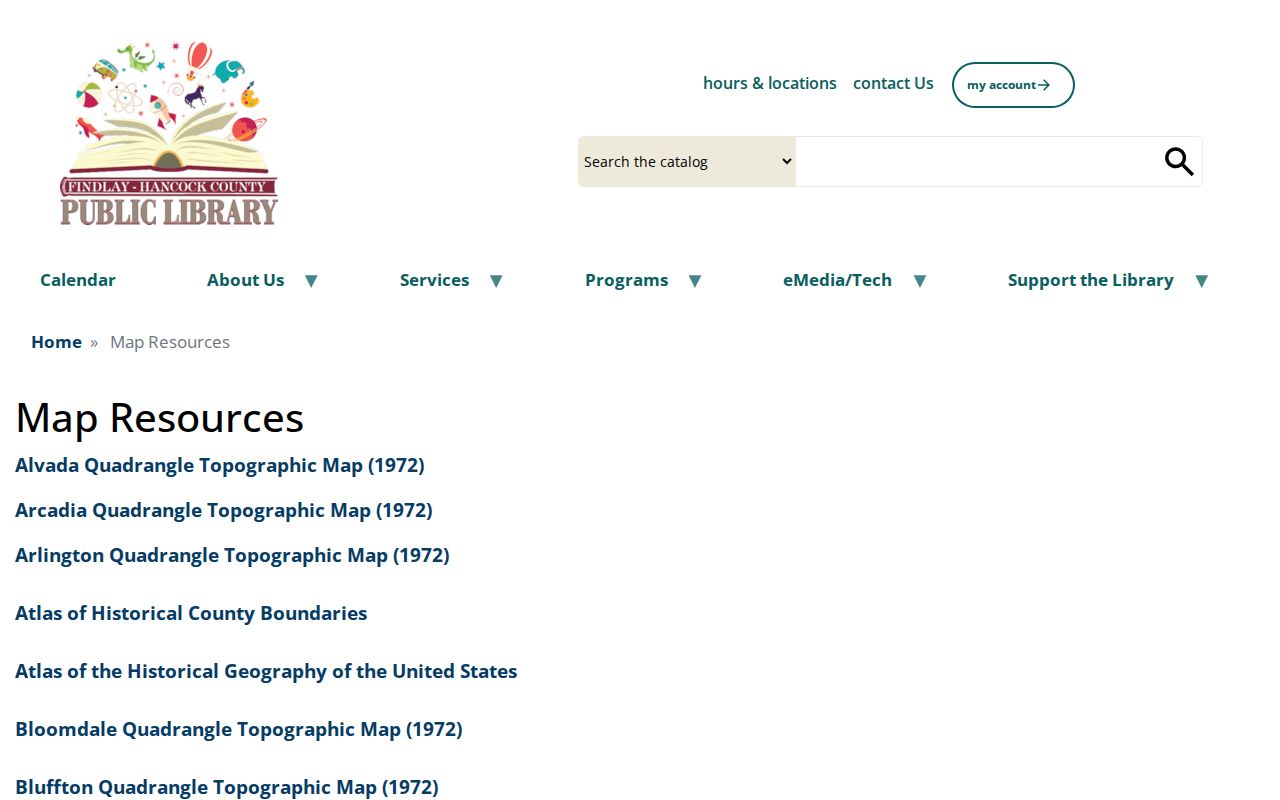
A Sanborn sheet can place a directory address on the ground and show a building’s footprint or use. It cannot identify who occupied the building.
Findlay City Directory Timeline Markers
A compact chronology prevents the directory collection from floating free of its record setting. Hancock County was organized in 1820, and Findlay was laid out in 1821 and incorporated in 1838. The Local & Family History collection has its own history too: FHCPL was established in 1888, opened in the courthouse basement in 1890, moved to the old Broadway Post Office in 1935, and became a county-district library in 1973. The documented disruptions at the library do not prove a countywide loss of deed or court records.
| 1839 | County Treasurer Tax Duplicate in the digitized historical record layer |
|---|---|
| 1870 | Mayor Docket in the digitized collection |
| 1879, 1888, 1892, 1902 | Verified digitized Findlay directory editions |
| 1867–1920 | Hancock Probate Court Death Records in the digital collection |
| 1901–34 and 1924 | Digitized marriage-record layers |
Use the timeline to choose a parallel record for the gap between directory editions. A tax duplicate, mayor docket, probate death record, marriage material, newspaper, or map may preserve the same name or address in a different role.
Reading Findlay City Directory Entries
A 1902 Wiggins entry compresses several kinds of information into one line. For example, the directory shows: Smith Frank E (Anna), draftsman A M Smith, h 132 Marshall. That is a sample of the publication’s notation, not an identity finding. Read the surname and given name first, then copy the spouse name in parentheses, occupation, associated business or employer, and the exact address string. The table of contents places the abbreviation key on page 73, so photograph or transcribe that key with the entry.
| Name | Surname and given name, with spouse in parentheses when the volume lists one |
|---|---|
| Occupation | Work description, such as draftsman, puddler, or agent |
| Association | Business or employer detail when the entry supplies it |
| h | Residence indicator followed by the printed address |
| bds or rms | Boarding or rooming notation followed by an address |
| wid | Widow notation, often followed by the spouse’s name |
- Criss-cross directory
- An address-to-name directory arrangement. The verified 1997 Polk Cross-Reference Directory is the local example to confirm for that year.
- Householder entry
- An alphabetic entry representing one person or household contact, not a list of everyone who lived at the address.
- Abbreviation key
- The volume’s printed guide to shorthand such as h, bds, rms, and wid; use it before expanding a notation.
Trace a Findlay Household Through City Directories
A family-history trail is strongest when every entry is retained in its own year. Begin with the digitized Findlay city directory editions, then carry the spelling and printed street form to the next known edition. The path can reveal a move, a changed occupation, a spouse notation, or a boarding address. It can also reveal a false match. Names disappear for many ordinary reasons, including a move, a changed spelling, a missed entry, or publisher coverage. Pair the directory evidence with the nearest released federal census instead of treating a gap as a death or departure.
- Search the surname in the 1879, 1888, 1892, and 1902 digitized editions, including likely spelling variants.
- Transcribe the full entry, its edition, page, spouse notation, occupation, and exact printed address.
- Check whether the address or surname appears in the 1997 Polk cross-reference when that later year is relevant.
- Pair each directory year with the nearest released federal census, preserving differences in age, birthplace, and household composition.
- Use an obituary citation, probate file, cemetery inquiry, or recorded-property trail only to test the dated lead with the proper custodian.
A later record may solve a historical ambiguity, but it should not overwrite the date attached to the printed directory entry. For a current, address-keyed trail, use the Findlay Street Directory rather than extending a historical volume beyond its publication year.
Note: Census schedules and directory editions record different dates and purposes, so a name difference needs corroboration before it becomes a conclusion.
Findlay City Directory Companion Collections
Historic newspapers can fill the space between the surviving city directories. FHCPL’s Digital Archives includes the Democratic Courier from 1846–48, the Hancock Courier from 1851–1914, the Findlay Daily Courier from 1887–1924, and several other local runs. Search surname variations and street names because the newspapers use OCR. The Ohio Obituary Index is useful for finding a citation before a narrow library request.
The Hancock Historical Museum research collection adds books, photographs, manuscripts, and artifacts to the local record trail.
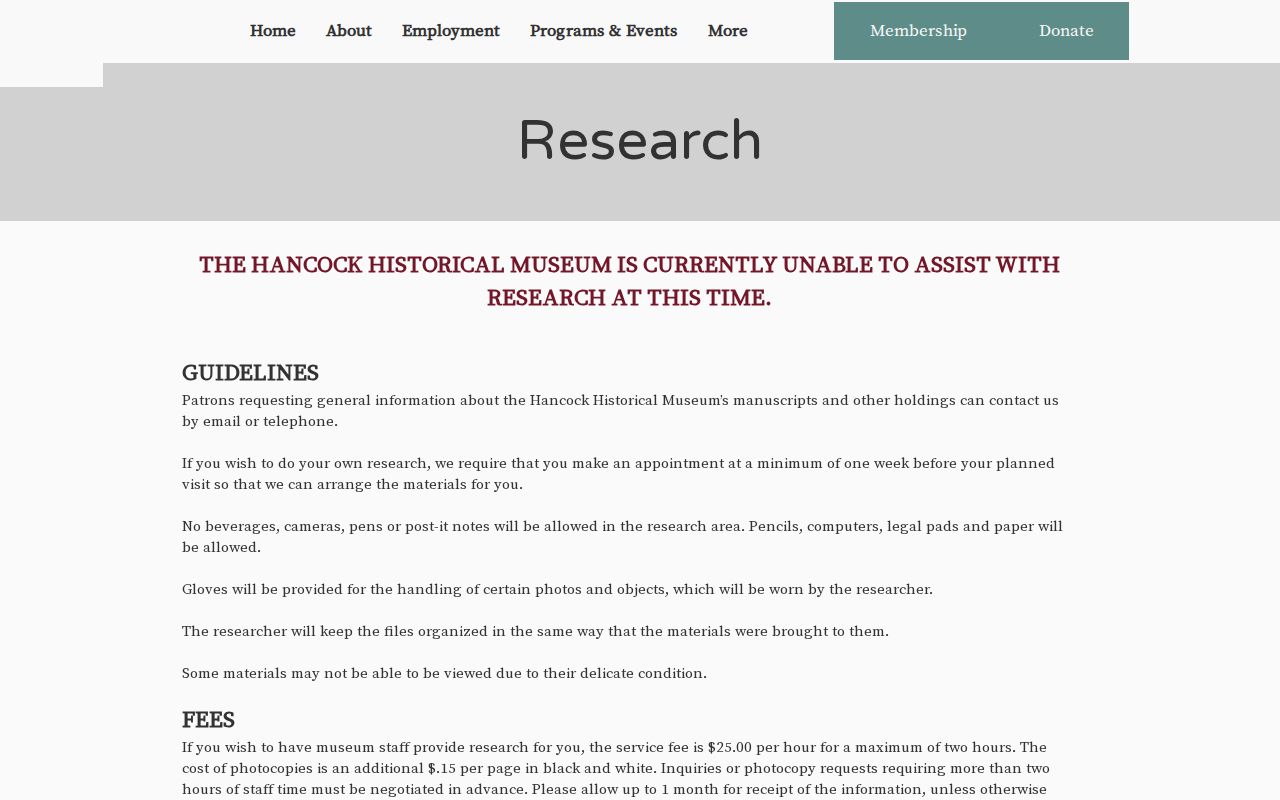
The museum reports more than 70,000 items and asks self-directed researchers to book at least a week ahead. Its stated access and scanning rules can change, so call before a visit. The Black Heritage Library & Multicultural Center Digital Archive is another supplementary local history source, not a citywide resident roll.